
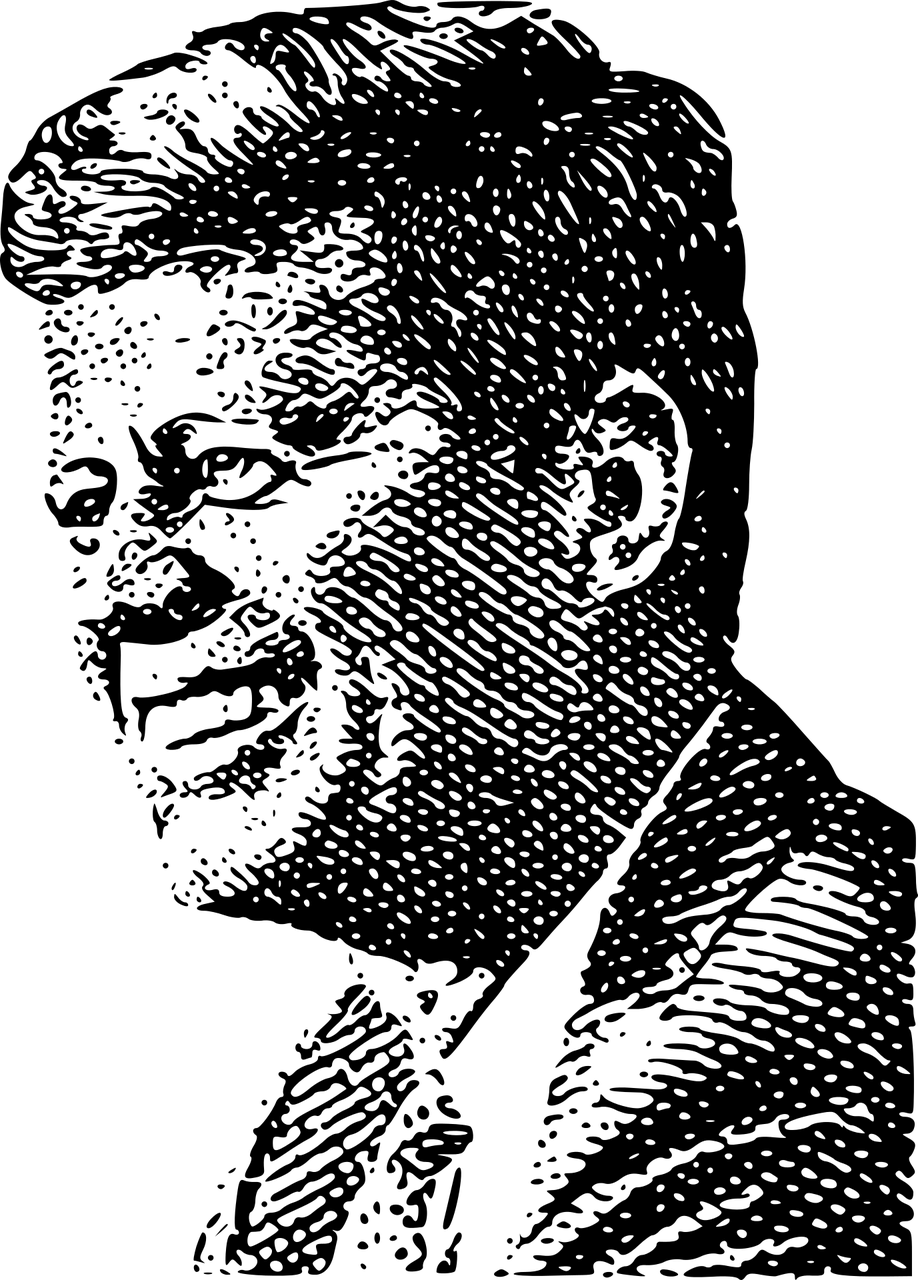
A/N: JFK is my favourite American president. He was a leading voice for peace in a time when the world was hurtling towards self-destruction and a War to End All Wars. The Cuban Missile Crisis is not spoken of nearly enough these days. It seems a distant memory to most who lived through it and for those who didn’t, they frequently wonder what all the fuss was about as clearly people would never be stupid enough to actually go through with a nuclear war. However, Lest We Forget applies to this watershed moment in history as much as any other war, cold or not. The Cuban Missile Crisis was undeniably important, not only in how the world survived to this day but in how people viewed themselves.
Snail Archer (2016)
_@v
The Cuban Missile Crisis served to not only secure Americas place in the world as having hegemony within the Western hemisphere but furthermore highlighted the flexible and effective peace-making diplomacy of the Kennedys which took America from a place of hard-line imperialism to a more peace-making imperative. Empire and hegemony will here be used interchangeably, and refers to the ideological, economic and political dominance America exerts over a region or regions. While events such as the Spanish American war, the Bay of Pigs, the Berlin Crisis and Castro’s revolution are worthy of individual study, they are essential to the construction of the Cuban Missile Crisis. Relations between America and Cuba were volatile for a long time before the Crisis, and had been particularly so ever since America had acquired Cuba as an imperial possession following their defeat of the Spanish in 1898. American oppression of Cuban freedom and independence would grow into Fidel Castro’s revolution of 1958-1959, without which there likely would never have been a communist connection to the island. Cuban-American relations continued to deteriorate rapidly under Dwight Eisenhower and then under John F. Kennedy, as the CIA in particular continued a series of long and often bungled covert assaults on Cuba which led to Castro seeking Soviet help in the defence of the island. During the early days following the revelation on October 16 that there were Soviet dual-use missiles in Cuba, JFK set up the Executive Committee of the National Security Council (EXCOMM) to deal with the Crisis. They kept the Crisis secret from the public until they had decided on a course of action. However, public support of JFK’s foreign policy decisions remained high even after the Crisis was made public on October 22. American diplomatic efforts in working with the United Nations and Khrushchev would eventuate over the course of the thirteen days from October 16 to 28 into a peaceful resolution to the Crisis. The terms and manner of the resolution of the Cuban Missile Crisis secured America’s place in the world the Western hegemon, and also ensured success for JFK’s plans for détente with the Soviet Union.
America has a long history of close economic and political ties with Cuba, but a crucial event in the galvanising of Cuban-American affairs was the Spanish-American War of 1898, which not only secured a place in the world for the formerly isolationist America as an empire but started the ball rolling for the nuclear standoff of the Cuban Missile Crisis over sixty years later. The exponential increase of Cuban sugar production in the latter half of the nineteenth century[1] coincided with American economic crisis of the 1880s to facilitate further economic expansion into Cuba, leading to an estimated $45,229,000 of American investment, with the US owning major productive assets including mines, sugar mills, and plantations[2]. Cuba Libre, the idea of an independent Cuban nation, was advocated by José Marti who lead the Cuban revolution against the Spanish from 1895-1898[3]. While most Cubans, excluding those with strong business ties to the USA, were in favour of Cuba Libre, Americans were split over the idea, with the Congress and much of the public in favour, but business interests and the executive branch of government supported an annexation of Cuba from Spain to America[4]. This new ideology of expansion was made palatable by framing American imperialism through the expansion of republican citizenship and liberty, though it was a means of sustaining American corporate enterprise[5]. The transition to this mode of imperialism was eased by the Spanish-American War, as Americans imagined the war as a moral undertaking, in the promotion of Cuba Libre over an Old World monarchy[6]. Having won the war, America inherited many of Spain’s colonial possessions, including Cuba[7]. Faced with the issue of the Cuban’s own desire for independence in conjunction with American support for Cuban sovereignty, America created the Cuban Republic on May 20, 1902 which nevertheless remained under American control along the lines of the 1901 Platt Amendment[8]. America had here obtained a place in the world as an imperial power, even if the government was often hesitant to couch it in such terms for fear of negative public reaction.
The close geographical position of Cuba to America means that it has long been seen as either a natural appendage to America or a dangerous foreign-controlled stronghold threatening American coasts[9], and thus when Castro overthrew the Batista regime in 1959, he presented a confounding problem for American foreign policy. During his revolution, Castro funded his campaign through the acquisition of American properties such as large estates and businesses, and offered inadequate compensation at 20 percent the market value which curried negative opinion in America[10]. America felt that Castro’s Cuba was far more radical than their tastes, and a potential threat to their hegemony over Latin America with Castro’s aggressive opposition to the right-wing dictatorships in Latin America which were often political puppets of America perpetrated by the CIA[11]. Allen Dulles, as Director of Central Intelligence until 1961, had maintained throughout 1958-1959 that while Castro’s revolution was destabilising, it was not communist, and therefore the new Cuban officials ought not to be treated as a threat but as children to be led, which was a continuation of the history of Cuba in the American imaginary as seen in many turn of the century images[12]. Although JFK would express his support for the non-Communist Cuban revolution, Castro was convinced that America would invade and so he sought support from countries within the Soviet bloc[13]. The Soviet Union during the period of 1960-1966 increasingly aligned themselves in defence of Cuba[14], but the Soviet motive for Operation Anadyr was complex and multifaceted as it could also change the strategic balance of power, gain bargaining chips to settle the Berlin problem, and humiliate the Kennedy administration[15]. Kennedy could not afford to be seen as soft on Communism nor allow such a direct threat to American geopolitical control and in this, the Soviets had severely miscalculated. Cuba was therefore a pressing issue inherited by Kennedy from Eisenhower, which would determine the fate of America’s political position of hegemonic power in world.
Despite fears about Communist Cuba, America did not expect the Soviets to introduce offensive nuclear armaments to the island, a view which was supported by CIA intelligence, and so attempted to quash the revolution. During the 1960 election, JFK had involved a strong campaign of critique of Eisenhower’s foreign policies, which resulted in a feeling that the new administration would be criticized were it not substantially different[16]. Yet the Kennedy administration had inherited policies such as the asymmetrical containment of Allen Dulles and George Kennan[17], and most notoriously the Bay of Pigs, which when conducted in 1961 was a perfect failure in politico-military terms[18]. Dulles’ resignation was quietly accepted by Kennedy in the wake of the Bay of Pigs fiasco[19], even as the President publically took all the blame onto himself and thus, perhaps paradoxically, saw his approval ratings rise[20]. However, covert action by the CIA against Castro’s Cuba continued with immense scope and scale, the main project of which was Operation Mongoose, launched in November 1961, with an annual budget of $50 million, that perpetrated acts ranging from poisoning sugar exports to attempting to kill Castro[21]. However, Dulles’ replacement, John McCone, testified to the Church Committee that he was not aware of the assassination planning, and it remains a matter of speculation whether the Kennedys were aware or not, or whether elements of the CIA had ‘gone rogue’[22]. Had there been no attempts, such as the Bay of Pigs and Operation Mongoose, to quash the Cuban revolution, there likely would never have been a missile crisis, a view confirmed by Robert McNamara in 1989, as this action led the Cubans to believe the threat of invasion from America was very real and a Soviet nuclear deterrent was their only option[23]. Khrushchev’s tight security over nuclear weapons contributed to the CIA’s misperceptions of Soviet plans, as he would not allow the possibility of Cubans taking control of the weapons, even with more than 20,000 ground troops protecting the Soviet investment[24]. America had therefore created its own enemy through its attempts to recover an imperial possession.
The revelation of Soviet plans for Cuba shocked the Kennedy administration, but their adept handling of the situation in its early days facilitated a peaceful resolution. Starting on October 16, 1962, for the first five days of the crisis, EXCOMM met to create a strategic plan[25]. Their initial plan was to threaten an airstrike, but this was rejected in part for fear the Soviets would react belligerently and initiate nuclear escalation[26]. However JFK believed that some form of coercive action would have to be taken, and this decision is considered both a serious gamble and an act of brinksmanship meant to preserve his own prestige as well as well warranted by the circumstances[27]. EXCOMM understood that a successful nuclear armament of Cuba with an estimated 64 missiles of medium-and-intermediate-range would double Soviet striking capacity against American targets, but still leave the US with a 2-1 superiority, so therefore the crucial shift was that in the balance of political, not military, power[28]. Yet still the new nuclear equilibrium would permit Khrushchev to reopen the question of Berlin[29]. Furthermore, the debates within EXCOMM continued despite strong pressures by JFK placed on Theodore Sorenson and Robert Kennedy to pull the group together quickly for a consensus, and this dissension was productive in preventing the phenomenon of groupthink, the very thing which had bungled the Bay of Pigs a year earlier[30]. The legacy of the Bay of Pigs helped EXCOMM, as after the failed invasion, JFK had introduced a series of sweeping changes to the decision-making processes of his team of advisors[31]. EXCOMM therefore understood the need for a firm yet peaceful resolution in order to properly maintain America’s position in the world as the hegemonic protector of the Western hemisphere.
The need for a peaceful but firm solution to the Crisis took root in the need to uphold America’s reputation as a world leader, and so the Kennedy administration kept closely in mind public reactions and perceptions to the Crisis and their handling of it. From as early as late July, 1962, Soviet shipments for the building of nuclear weapons sites in Cuba began to arrive on the island[32]. On August 29, a U-2 flight showed clear evidence of these sites and Kennedy responded in September by publically stating no offensive weapons would be tolerated in Cuba, and receiving an assurance from Khrushchev that he essentially would not start any incidents before the November congressional elections[33]. Sorenson would later indicate Kennedy would have drawn the line at 100 missiles instead of zero if he had known the Soviets were placing missiles in Cuba, while McGeorge Bundy would insist the American public would not have allowed such a choice[34]. Polls throughout the Kennedy presidency showed that although the public concern over Cuba remained high around 20-25 percent from late September through until the end of the Crisis, their support for and belief in their president was a staggering average 70 percent approval rate, the highest of any post-World War II president[35]. Furthermore, their support for Kennedy’s foreign policies decisions overrode domestic concerns such as race relations, as African Americans were among the greatest supporters of JFK[36]. This public support was carefully maintained by the Kennedys as their actions during the Crisis were shaped considerably by the Pearl Harbour in reverse analogy[37]. Castro had once called the Bay of Pigs invasion, Cuba’s ‘Pearl Harbour’[38], and on October 18 the Kennedys were reminded of this by a passionate memo from George Ball[39]. This helped to steer EXCOMM away from choosing an airstrike as their first option, for what seems entirely moral purposes. The Crisis became public only on October 22, after EXCOMM reached the decision on October 20 for a naval blockade, to be called a quarantine so as to avoid the use of war language, of all offensive weapons to Cuba[40]. The careful handling of the Crisis by the Kennedy administration, a factor crucial in the peaceful resolution to the Crisis which secured once again America’s dominant place in the world, is clearly shown in their consideration of the moral consequences of actions against Cuba and considerations of the American domestic sphere.
The resolution to the Cuban Missile Crisis came not in the form of any military action, however, as the blockade of Cuba was merely a preventative measure; it instead came through diplomacy, carried out by JFK and those he trusted. Even as the Kennedy administration strove to keep secret from October 16 to 22 the news that the Soviets had begun building nuclear missile bases in Cuba, they informed secretary general of the United Nations, U Thant[41], a man who would play a significant role in de-escalating the nuclear standoff by advancing the ‘noninvasion for missiles’ formula and travelling to Cuba to mollify Castro[42]. While Thant’s role has often been forgotten in favour of traditionalist theories that Kennedy’s threat of force alone resolved the Crisis, his diplomacy was essential in the peaceful resolution[43]. JFK would demonstrate how necessary Thant was, as he later said, “U Thant has put the world deeply in his debt.”[44] Yet it was not only Thant whose diplomacy resolved the Crisis, but JFK himself along with Attorney General Robert Kennedy. During the night of October 25-26, both JFK and Khrushchev agreed to Thant’s appeal for the US and USSR to avoid confrontation, and JFK told the Soviet leader that America would do everything possible to avoid a direct confrontation, to which Khrushchev replied by halting Soviet ships to Cuba and renewed his call for negotiations[45]. JFK then replied to a letter from Khrushchev outlining Soviet terms for peace on October 27, in which Kennedy welcomed Khrushchev’s desire for a peaceful diplomatic solution but agreed only to terms that would suit America’s public image. The outline was such that the Soviet Union would “remove weapon systems from Cuba”[46] and America would in turn “remove promptly the quarantine measures now in effect and … give assurances against an invasion of Cuba”[47]. However, Kennedy went on to assure Khrushchev that “the effect of such a settlement on easing world tensions would enable us to work toward a more general arrangement regarding “other armaments””[48], essentially privately agreeing to remove America’s Jupiter missiles from Turkey. Were this a public move, America’s place in the balance of world power would be disturbed, yet it was in line with the Kennedy’s intentions of bringing about a state of détente[49] with the Soviet Union so they could focus their attention on other interests in the maintenance of American hegemony. As Kennedy said in his letter, “the United States is very much interested in reducing tensions and halting the arms race”[50]; a sentiment both Washington and Moscow could finally agree upon. RFK met with Dobrynin to discuss JFK’s letter of October 27 to Khrushchev in person, to insure the letter was understood in all its meanings[51]. Khrushchev agreed to the terms on October 28, and thus the Crisis was publically brought to a close[52]. Although short range tactical nuclear armaments and Soviet troops would remain in Cuba after the Crisis, JFK made the decision that this was an acceptable risk to US security as such a situation did not threaten America’s position in the world, and he did not believe the risk of an uncontrollably escalating thermonuclear war was worth any further attempts to invade Cuba[53]. America had successfully maintained her place in the world as a hegemonic power, and had also secured a position as a force for peace-making.
The Cuban Missile Crisis was perhaps the most significant event of the Cold War, when for thirteen days the world stood on the brink of all-out thermonuclear war. Ten years before the crisis, Reinhold Niebuhr said “The necessity of using the threat of atomic destruction as an instrument for the preservation of peace is a tragic element in our contemporary situation [and this] security is transmuted into insecurity because too much reliance is placed upon it.”[54] Nothing could be truer of the Cuban Missile Crisis, an insecurity that had taken root in the soil of American imperialism, nourished by Eisenhower era policies of containment, and finally bloomed into the standoff between East and West that ultimately could decide the fate of the world. Had anyone but the Kennedy administration been in office during that October, it is entirely likely the delicate situation may have erupted. According to Sorenson, Schlesinger, and Hilsman, the Crisis was JFK’s finest hour as his admirable leadership during the Crisis led to a reduction in Cold War tensions, promoted peaceful coexistence and détente between the US and USSR, and effectively broke the Sino-Soviet bloc[55] thereby securing America’s place in the world as a hegemonic power in the service of peace.
Bibliography
Primary
Kennedy, John F. “John F. Kennedy: 1962: containing the public messages, speeches, and statements of the president, January 20 to December 31, 1962.” Public Papers of the President.
http://quod.lib.umich.edu/p/ppotpus/4730892.1962.001/875?rgn=full+text;view=image. Accessed 15/09/2016.
Niebuhr, Reinhold. The Irony of American History. New York: Charles Scribner’s Sons. 1954.
Schlesinger, Arthur M. Jr. A Thousand Days: John F. Kennedy in the White House. London: Andre Deutsch. 1965.
N/A. The Kennedy Tapes: Inside the White House during the Cuban Missile Crisis. Edited by Ernest R. May and Philip D. Zelikow. Cambridge: The Belknap Press of Harvard University Press. 1997.
Secondary
Benjamin, Jules R. The United States and the Origins of the Cuban Revolution. New Jersey: Princeton University Press. 1990.
Briggs, Justin. Power, Prosperity and Promise: A History of the USA, 1898-1941. Sydney: McGraw-Hill. 2003.
Campus, L. “Missiles have no colour: African Americans’ reactions to the Cuban Missile Crisis.” Cold War History 15 no. 1 (2015): pp. 49-72.
Coleman, D. G. “The Missiles of November, December, January, February…: The Problem of Acceptable Risk in the Cuban Missile Crisis Settlement.” Journal of Cold War Studies 9 no. 3 (2007): pp. 5-48.
Dorn, A. W. and Pauk, R. “Unsung Mediator: U Thant and the Cuban Missile Crisis.” Diplomatic History 33 no. 2 (2009): pp. 261-292.
Dunne, M. “Perfect Failure: the USA, Cuba and the Bay of Pigs, 1961.” The Political Quarterly 82 no. 3 (2011): pp. 448-458.
Gaddis, John Lewis. Strategies of Containment: A Critical Appraisal of American National Security Policy during the Cold War. New York: Oxford University Press, 2005.
Gleijeses, P. “Ships in the Night: The CIA, the White House and the Bay of Pigs.” Journal of Latin American Studies 27 (1995): pp. 1-42.
Janis, Irving L. Groupthink. Boston: Houghton Mifflin Company. 1982.
Kolko, Gabriel. Main Currents In Modern American History. New York: Harper & Row. 1976.
Lebow, R. N. “Was Khrushchev bluffing in Cuba?” Bulletin of the Atomic Scientists 44 no. 3 (1988): pp: 38-42.
Medland, W. J. “The Cuban Missile Crisis: Evolving Historical Perspectives.” The History Teacher 23 no. 4 (1990): pp. 433-447.
Paterson, T. G. and Brophy, W. J. “October Missiles and November Elections: The Cuban Missile Crisis and American Politics, 1962.” The Journal of American History 73 no. 1 (1986): pp. 87-119.
Perez, Louis A. Jr. Cuba and the United States: Ties of Singular Intimacy. London: The University of Georgia Press. 2003.
Perez, Louis A. Jr. Cuba in the American Imaginary: Metaphor and Imperial Ethos. Chapel Hill: The University of North Carolina Press. 2008.
Schoultz, Lars. That Infernal Little Cuban Republic. Chapel Hill: The University of North Carolina Press. 2009.
Scott, L. “The ‘Incredible Wrongness’ of Nikita Khrushchev: The CIA and the Cuban Missile Crisis.” History 1 (2015): pp. 210-228.
Sewell, B. “The Pragmatic Face of the Covert Idealist: The Role of Allen Dulles in US Policy Discussions on Latin America, 1953–61.” Intelligence and National Security 26 no. 2 (2011): pp. 269-290.
Smith, T. W. “The Cuban Missile Crisis and U.S. Public Opinion.” Public Opinion Quarterly 67 (2003): pp. 265-293.
Tierney, D. “”Pearl Harbour in Reverse”: Moral Analogies in the Cuban Missile Crisis.” Journal of Cold War Studies 9 no. 3 (2007): pp. 49-77.
Westad, Odd Arne. The Global Cold War: Third World Interventions and the Making of Our Times. New York: Cambridge University Press, 2005.
[1] Jules R. Benjamin, The United States and the Origins of the Cuban Revolution (New Jersey: Princeton University Press, 1990), p. 22.
[2] Louis A. Perez, Jr, Cuba and the United States: Ties of Singular Intimacy (London: The University of Georgia Press, 2003), p. 59-61; Jules R. Benjamin, The United States and the Origins of the Cuban Revolution (New Jersey: Princeton University Press, 1990), p.32-33.
[3] Jules R. Benjamin, The United States and the Origins of the Cuban Revolution (New Jersey: Princeton University Press, 1990), p. 22.
[4] Louis A. Perez, Jr, Cuba and the United States: Ties of Singular Intimacy (London: The University of Georgia Press, 2003), p. 86-87, 94-95.
[5] Jules R. Benjamin, The United States and the Origins of the Cuban Revolution (New Jersey: Princeton University Press, 1990), p. 28.
[6] Louis A. Perez Jr., Cuba in the American Imaginary: Metaphor and Imperial Ethos (Chapel Hill: The University of North Carolina Press, 2008), p. 176-177.
[7] Justin Briggs, Power, Prosperity and Promise: A History of the USA, 1898-1941 (Sydney: McGraw-Hill, 2003), p. 20-23.
[8] Louis A. Perez, Jr, Cuba and the United States: Ties of Singular Intimacy (London: The University of Georgia Press, 2003), p. 109-113; Jules R. Benjamin, The United States and the Origins of the Cuban Revolution (New Jersey: Princeton University Press, 1990), p. 68; Gabriel Kolko, Main Currents In Modern American History (New York: Harper & Row, 1976) p. 212-213.
[9] Jules R. Benjamin, The United States and the Origins of the Cuban Revolution (New Jersey: Princeton University Press, 1990), p. 28.
[10] M. Dunne, “Perfect Failure: the USA, Cuba and the Bay of Pigs, 1961,” The Political Quarterly 82 no. 3 (2011): p. 452.
[11] B. Sewell, “The Pragmatic Face of the Covert Idealist: The Role of Allen Dulles in US Policy Discussions on Latin America, 1953–61,” Intelligence and National Security 26 no. 2 (2011): pp. 287; Odd Arne Westad, The Global Cold War: Third World Interventions and the Making of Our Times (New York, Cambridge University Press, 2005), p.175-176.
[12] B. Sewell, “The Pragmatic Face of the Covert Idealist: The Role of Allen Dulles in US Policy Discussions on Latin America, 1953–61,” Intelligence and National Security 26 no. 2 (2011): pp. 287.
[13] Odd Arne Westad, The Global Cold War: Third World Interventions and the Making of Our Times (New York, Cambridge University Press, 2005), p.172.
[14] Ibid, p. 175.
[15] W. J. Medland, “The Cuban Missile Crisis: Evolving Historical Perspectives,” The History Teacher 23 no. 4 (1990): p. 438.
[16] John Lewis Gaddis, Strategies of Containment: A Critical Appraisal of American National Security Policy during the Cold War (New York, Oxford University Press, 2005), p. 197.
[17] Ibid, p. 212.
[18] M. Dunne, “Perfect Failure: the USA, Cuba and the Bay of Pigs, 1961,” The Political Quarterly 82 no. 3 (2011): p. 448, 455, 45; P. Gleijeses, “Ships in the Night: The CIA, the White House and the Bay of Pigs,” Journal of Latin American Studies 27 (1995): p. 3.
[19] B. Sewell, “The Pragmatic Face of the Covert Idealist: The Role of Allen Dulles in US Policy Discussions on Latin America, 1953–61,” Intelligence and National Security 26 no. 2 (2011): pp. 288.
[20] T. W. Smith, “The Cuban Missile Crisis and U.S. Public Opinion,” Public Opinion Quarterly 67 (2003): p. 274.
[21] L. Scott, “The ‘Incredible Wrongness’ of Nikita Khrushchev: The CIA and the Cuban Missile Crisis,” History 1 (2015): p. 212.
[22] Ibid, p. 213.
[23] Ibid, p. 213-214.
[24] R. N. Lebow, “Was Khrushchev bluffing in Cuba?” Bulletin of the Atomic Scientists 44 no. 3 (1988): p: 41; L. Scott, “The ‘Incredible Wrongness’ of Nikita Khrushchev: The CIA and the Cuban Missile Crisis,” History 1 (2015): p. 210; Irving L. Janis, Groupthink (Boston: Houghton Mifflin Company, 1982), p. 132.
[25] Irving L. Janis, Groupthink (Boston: Houghton Mifflin Company, 1982), p. 137.
[26] Ibid, p. 137.
[27] Irving L. Janis, Groupthink (Boston: Houghton Mifflin Company, 1982), p. 136; T. G. Paterson, and W. J. Brophy, “October Missiles and November Elections: The Cuban Missile Crisis and American Politics, 1962.” The Journal of American History 73 no. 1 (1986): p. 89.
[28] Arthur M. Schlesinger Jr. A Thousand Days: John F. Kennedy in the White House (London: Andre Deutsch, 1965), p. 681.
[29] Ibid, p. 681.
[30] Irving L. Janis, Groupthink (Boston: Houghton Mifflin Company, 1982), p. 39-46, 139; P. Gleijeses, “Ships in the Night: The CIA, the White House and the Bay of Pigs,” Journal of Latin American Studies 27 (1995): p. 2.
[31] Irving L. Janis, Groupthink (Boston: Houghton Mifflin Company, 1982), p. 140-141.
[32] Arthur M. Schlesinger Jr. A Thousand Days: John F. Kennedy in the White House (London: Andre Deutsch, 1965), p. 682.
[33] Arthur M. Schlesinger Jr. A Thousand Days: John F. Kennedy in the White House (London: Andre Deutsch, 1965), p. 683; W. J. Medland, “The Cuban Missile Crisis: Evolving Historical Perspectives,” The History Teacher 23 no. 4 (1990): p. 438.
[34] W. J. Medland, “The Cuban Missile Crisis: Evolving Historical Perspectives,” The History Teacher 23 no. 4 (1990): p. 438-439.
[35] W. J. Medland, “The Cuban Missile Crisis: Evolving Historical Perspectives,” The History Teacher 23 no. 4 (1990): p. 438-439; T. W. Smith, “The Cuban Missile Crisis and U.S. Public Opinion,” Public Opinion Quarterly 67 (2003): p. 266-267, 269.
[36] L. Campus, “Missiles have no colour: African Americans’ reactions to the Cuban Missile Crisis,” Cold War History 15 no. 1 (2015): p. 71.
[37] D. Tierney, “”Pearl Harbour in Reverse”: Moral Analogies in the Cuban Missile Crisis.” Journal of Cold War Studies 9 no. 3 (2007): p. 50.
[38] M. Dunne, “Perfect Failure: the USA, Cuba and the Bay of Pigs, 1961,” The Political Quarterly 82 no. 3 (2011): p. 458.
[39] The Kennedy Tapes: Inside the White House during the Cuban Missile Crisis. ed. Ernest R. May and Philip D. Zelikow (Cambridge: The Belknap Press of Harvard University Press, 1997), p. 121.
[40] Irving L. Janis, Groupthink (Boston: Houghton Mifflin Company, 1982), p. 138.
[41] A. W. Dorn, and R. Pauk, “Unsung Mediator: U Thant and the Cuban Missile Crisis,” Diplomatic History 33 no. 2 (2009): p. 261.
[42] Ibid, p. 262.
[43] A. W. Dorn, and R. Pauk, “Unsung Mediator: U Thant and the Cuban Missile Crisis,” Diplomatic History 33 no. 2 (2009): p. 262-263; T. G. Paterson, and W. J. Brophy, “October Missiles and November Elections: The Cuban Missile Crisis and American Politics, 1962.” The Journal of American History 73 no. 1 (1986): p. 87; W. J. Medland, “The Cuban Missile Crisis: Evolving Historical Perspectives,” The History Teacher 23 no. 4 (1990): p. 436.
[44] A. W. Dorn, and R. Pauk, “Unsung Mediator: U Thant and the Cuban Missile Crisis,” Diplomatic History 33 no. 2 (2009): p. 261.
[45] The Kennedy Tapes: Inside the White House during the Cuban Missile Crisis. ed. Ernest R. May and Philip D. Zelikow (Cambridge: The Belknap Press of Harvard University Press, 1997), p. 439.
[46] John F. Kennedy, “John F. Kennedy: 1962: containing the public messages, speeches, and statements of the president, January 20 to December 31, 1962,” Public Papers of the President, available from http://quod.lib.umich.edu/p/ppotpus/4730892.1962.001/875?rgn=full+text;view=image, accessed 15/09/2016.
[47] Ibid.
[48] Ibid.
[49] Ibid.
[50] Ibid.
[51] The Kennedy Tapes: Inside the White House during the Cuban Missile Crisis. ed. Ernest R. May and Philip D. Zelikow (Cambridge: The Belknap Press of Harvard University Press, 1997), p. 603-606.
[52] Ibid, p. 630.
[53] D. G. Coleman, “The Missiles of November, December, January, February…: The Problem of Acceptable Risk in the Cuban Missile Crisis Settlement,” Journal of Cold War Studies 9 no. 3 (2007): p. 5-6, 47.
[54] Reinhold Niebuhr, The Irony of American History (New York: Charles Scribner’s Sons, 1954), p. 3.
[55] W. J. Medland, “The Cuban Missile Crisis: Evolving Historical Perspectives,” The History Teacher 23 no. 4 (1990): p. 435.

 Archer's Library
Leave a comment