

A/N: As the fourth and final part in my professional development series, I will be talking about artificial intelligence as an emerging technology and how it might be used in children’s librarianship. Now, I personally think of The Terminator (1984) whenever I think of A.I. You’ll hear me crying, “Skynet!” whenever a computer seemingly does something of its own accord. However, I hope the real world developers of A.I. have also watched The Terminator (1984) and now Megan (2022) and are preemptively learning from these mistakes so we do not actually have to live through them!
Snail Archer
_@v
As an English tutor for children, I can honestly say that the 2022 surprise hit movie Megan has been on the minds of children (despite it’s MA rating in Australia). ChatGPT is another hot topic. Artificial intelligence or A.I. is an exciting emerging technology for children. I had a look at the American Library Association’s Library of the Future: Center for the Future of Libraries (ALA) 2017 article on Connected Toys, which also inspired me to reflect upon Ikeshita’s 2020 peer-reviewed article on public libraries in Japan compared to Europe, including technologies for dyslexic children.

ALA (2017) discussed the breakthroughs in speech recognition and A.I. that have created new ways for users to connect with their technologies and how it is now being applied to toys for children and young people. These ‘connected toys’ are in answer to the ‘digital natives’ (Rankin, 2012) but have caused some parents and educators concern over children’s passive use of digital technologies (ALA, 2017). Mattel has a Barbie Hello Hologram in development which can answer simple questions and tailor her looks to the child (ALA, 2017).

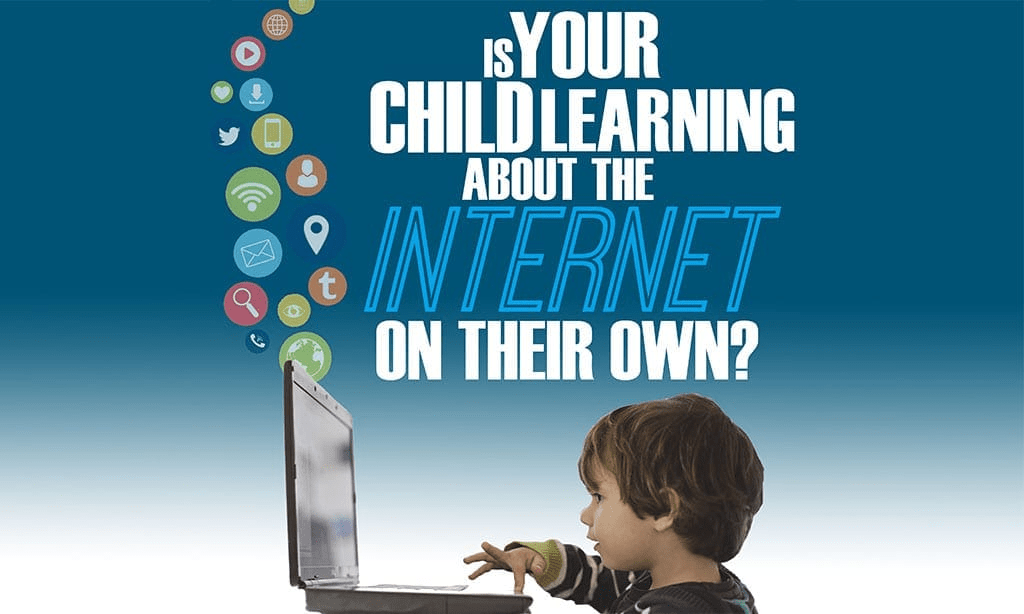
Connected toys pose various issues beyond children’s over-use of digital technologies. Privacy and security are paramount, as these connected toys may use the internet and be vulnerable to hacking, leading children to be vulnerable to online predators (ALA, 2017). Furthermore, there is a possibility of the child being shown targeted advertisements through the connected toy before they have reached an age where they are able to discern ads from facts (ALA, 2017).
There is also a concern for the limited socialisation, repetitive play instead of authentic play, and rote answering style that connected toys would have with children (ALA, 2017).
On the bright side, connected toys could be used in an educational fashion to help children develop greater knowledge of the world, and could be used to allow parents greater insight into what their children are doing (although this aspect would involve moral and ethical questions over how much control a parent should have over their child) (ALA, 2017).
Ikeshita (2020) did not discuss connected toys but did identify how European libraries use eBooks, apps and games to help children with dyslexia learn how to read and enjoy reading. I pondered while reading the ALA article if connected toys’ educational aspect could be used to help children with various disabilities in a library setting. They could be incredibly patient teachers for children with social disabilities or reading disabilities, helping the child grow to use the library at their own pace.
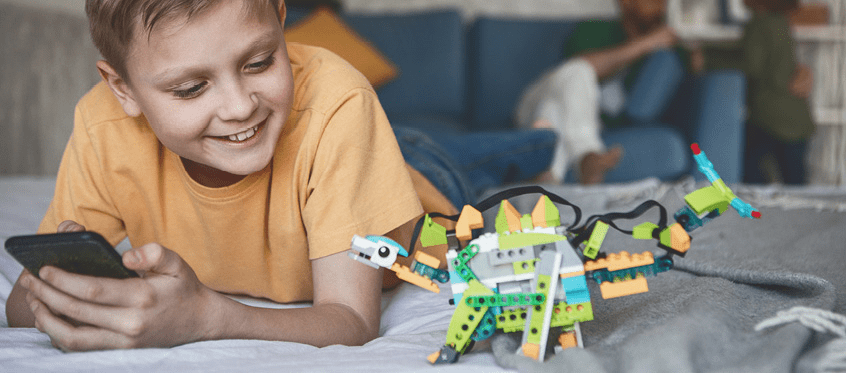
Overall, I think Megan (2022) spoke to children for a reason. The main child character in that movie has a connected toy, and putting aside the inevitable horror movie direction that it takes, the toy is beloved by her and helps her educationally. Art reflects life and it seems like real world connected toys are not far down the line. While not all libraries will have the resources to use connected toys, those libraries that can will likely find them to be useful educational tools, especially for children with special needs.
_@v
References:
American Library Association (ALA). (2017). Connected toys. http://www.ala.org/tools/future/trends/connectedtoys
Ikeshita, H. (2020). Japanese public library services for dyslexic children. Journal of Librarianship and Information Science, 52(2), 485–492. https://doi.org/10.1177/0961000618823871
Rankin, C. (2012). Library space and place transformation – designing for the digital natives. In C. Rankin & A. Brock (Eds.), Library services for children and young people: Challenges and opportunities in the digital age (pp. 159-182). Facet. https://doi.org/10.29085/9781856048989.013
_@v
Pictures:
https:// www. ultimate.ai/blog/ai-automation/chatgpt-the-tech-behind-the-hype-and-what-it-means-for-your-support
https:// www. coroflot.com/LilitPilikian/Hello-Barbie-Hologram
https:// www .familiesmagazine.com.au/online-safety-for-kids/
https:// www. synopsys.com/blogs/software-security/security-connected-toys/

 Archer's Library
Leave a comment